
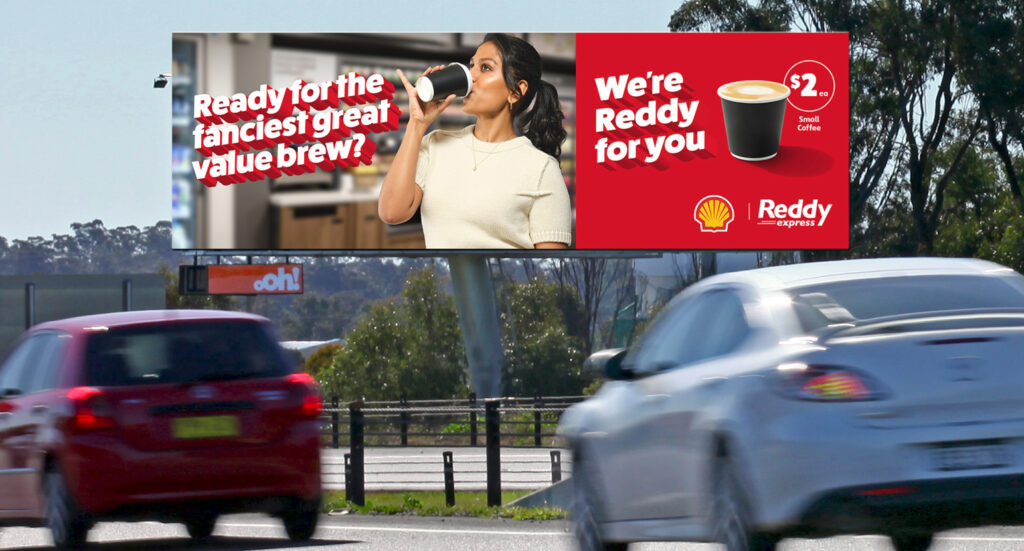
Our Executive Director Media and Data Ben Willee talks to Tim Burrows and Hal Crawford on the Mumbrella cast about how Pacific Equity Partners has made an offer to buy outdoor advertising company Ooh Media and also the Government’s News Media Bargaining Code.
Listen to Ben speak here:
Check out the podcast here:
Mumbrellacast: Ooh Media takeover bid and the News Bargaining Incentive
Or read the transcript:
Tim BurrowsWelcome to the Mumbrellacast. I’m Tim Burrows. We recorded a day early today as there’s been a lot happening. I’m joined by Mumbrella editorial director Hal Crawford.
Hal CrawfordGood day. Tim.
Tim BurrowsAnd the executive director for media and data at Spinach, Ben Willie. Can I Tim, can I help? Great to be here. So two topics today the o media takeover bid.
Ben WilleeG’day Tim. G’day Hal. Great to be here.
Tim BurrowsSo two topics today the oOh! Media takeover bid. And the government reveals its plans for forcing the digital platforms of some of them anyway to fund the publishers. So, lots happening. So we thought we would jump in and get the Mumbrellacast out the door a day early. Now, Ben, it always seems to be that we talk when there’s something dramatic and we jump on the mics in five minutes flat. So this week’s topic, the news that broke on the ASX this morning is that PEP, Pacific Equity Partners have launched a non-binding takeover bid for, oOh! Media. Non-binding means it might not happen, but I guess what normally happens when private equity starts something is that they usually finish it. Ben, your first reaction.
Ben WilleeWell outdoor used to be about big ideas on big billboards. Now it’s about big spreadsheets on very nervous desks. But I think this is a vote of confidence. And the reason I say that is, the people at, PEP or Pep or Pacific Equity Partners are probably some of the sharpest business brains in Australia. And they’ve taken a look at oOh! Media and said there’s much more money to be made and there’s improvements to be made here. So A: it’s a vote of confidence in Australian media. And B: it’s a statement that they think they can do it better. Now isn’t that interesting because there’s a lot to unpack with they think they can do it better.
Tim BurrowsThat is so interesting. Is it of course, is a little bit of history repeating itself because we saw with private equity, we saw Quadrant take QMS off the ASX, manage it for a number of years and then sell it onto Nine not that long ago.
Ben WilleeYeah. And look again, it’s another vote of confidence. You’ve got two very big media companies in Australia that see the power of outdoor. And you could certainly make the argument that as a traditional media and inverted commas, it’s been very, very resilient. Now is it traditional. Is it digital. We can argue that one to the cows come in. But, you know, there is an enormous appetite from advertisers for outdoor. I never met a brand manager who didn’t enjoy saying their brand on a big billboard roadside. We know it’s very powerful. We’ve seen what it can do in econometric modeling. So the real question here is how much more money do they think that can make Tim.
Tim BurrowsHal, you smiled at Ben’s point on the appetite for outdoor at the moment.
Hal CrawfordYeah. I mean, I’m speaking to the people I speak to. I completely agree. I don’t think outdoor has lost any of its, attractions. In fact, I think you recall, a few businesses starting up who only want to do, digital and outdoor. That’s a killer combination at the moment. One thing that did strike me about the, belief that these guys have, the private equity guys, that they can do it better. Remember when I spoke to oOh!, last year and, they told me that one of the problems was their aging infrastructure and the fact that it wasn’t very easy to do business with them.
Tim BurrowsAnd to be clear, when you’re talking about not the infrastructure of the billboards, but the the pipes, for want of a better word, the different systems behind the scenes.
Hal CrawfordThe way that you buy, the way that you deal with and the way that you buy from them, is reportedly not particularly easy. And that was a bit of a sore point for them. Perhaps there is, a belief that that can be done quicker and better than the current, you know, project to improve that. To me that makes a lot of sense. And, taking the company when you look at the market seems to make a lot of financial sense.
Tim BurrowsBen, that’s a good point. What does the market think about the ease of doing business and the comparison? Obviously there are three main players in JC Decaux and oOh! and QMS, but the comparative easiness of doing business between those three companies.
Ben WilleeOh look, I’ll start by saying they’re all very easy to do business with. But Hal’s hit the nail on the head. What we see from a trading point of view is a bit like a duck on the pond. We see the duck at the top and you know, the legs below us swimming vigorously. So we definitely get a sense that there’s a lot of work that the salespeople have to do behind the scenes at oOh!, to get deals over the line, especially when they’re multi-format deals. And that’s really tricky because there is an enormous opportunity for them to grow, not just their share of the outdoor pie, but they share of every pie because they have so many different formats, so many different locations, need states, modes that consumers are in. So if they can make that easier to do in their back end, they can present those deals to us more easily and that’s an opportunity to grow revenue. So I think without a doubt that’ll be one of the number one things that people at PEP will be looking at. And that’s the great thing about taking those businesses off market is you can plow a lot of money into that, and you can start to see the benefits immediately or in the longer term. And you don’t have shareholders breathing down your neck every half, demanding their return.
Tim BurrowsThat is one of those pressure points. Isn’t it big on the ASX, which is a journo? I love it because it’s where I get the the insights into what’s going on with the business, but I would not like it if I was the CEO of one of those companies where you’re trying to, get on with business. But as you say, having to kind of update the shareholders in the market on your progress every half year, which the argument then is that people end up making shorter term decisions than they necessarily, should then go.
Hal CrawfordTim, let me just turn it around here on you because you’ve been interrogating Ben and me and in fact, you have pretty well-informed opinions on this. So you and I have spoken in the past about media companies that, you know, we’ve got the unmade index. That’s our index of, publicly listed, media stocks. And we often have been talking recently about how it’s underpriced media companies and, you know oOh!, looks to be a case in point, you know, in someone saying the opportunity. So tell me about that. I mean, is that is that the really big picture here.
Tim BurrowsGood point. And I’m going to also make a declaration of interest is where we’re chatting, which is I sort of through my self-managed super fund. I do invest in most of the ASX listed media companies and that includes oOh! Media. So, just, just I’m just going on to my, my trading account right now to see how much I lost on my oOh! investment over the years. So yeah. So oOh! Media. Well, I’m currently down 38% now. I believe that this is on the current market capitalisation, now I believe the announcement from PEP says that they’re offering a market uplift of something like 40 or 45%. So, hey, I might get my shirt back at this rate. But and I should say, it’s only a very small amount of shares I have in all of these companies. But it does feel, and this just puzzles me, that outdoor has been the sector which is irrationally undervalued. You know, it’s the, you know, like, is a message used by at least one of the outdoor companies. It’s the, skippable medium. They’ve had so much benefit from digitisation. So rather than put up a billboard and it stays up for 30 days, you can you can change your message every 30 seconds if you want to. So there’s just more inventory available. So the quite early stages of the opportunities around that sort of programmatic planning. So there’s so much upside for outdoor yet to come that it does feel like the market has been quite short sighted in pricing out where they have and you know you wrote up our main index story last night Hal, which wasn’t a great landmark for our last night really was it.
Hal CrawfordI guess, their lowest ever market cap. And I’ve just gone back and looked at that graph again, and Tim, what was the PEP offer worth? It’s like 750 million.
Tim BurrowsI haven’t done that calculation myself, although a lot of it is in the ASX announcement with the AFR reporting that number.
Hal CrawfordI mean you don’t have to go too far back to find it’s been worth 900 million as a market cap. So that’s August 2025. So, 750 might sound like a lot, but actually it’s probably a fair price.
Ben WilleeI might an opinion on why they’re undervalued, if that’s alright. Tim, I think what’s really interesting from the analysts point of view is that there’s a huge amount of additional supply in the outdoor market and that’s a fixed size market, which obviously grows every year and its share of the pie gets bigger. But, you’ve taken in the last, let’s call it ten years. You’ve taken all those sites that used to sell to one advertiser for one month are now all digitised and selling up to ten advertisers every few minutes. So there’s an enormous amount of supply. And I think what the industry’s been really good at, is they’ve looked at what happened in the digital display market 15 years ago and said, when programmatic comes, we’re not falling down that rabbit hole and letting prices drop and drop and drop. So the industry is being really clever at holding up the price, but there is a lot of nervousness around will programmatic drive down the price. And my perception is, is when times are really, really good that will create more, you know, they’ll create more margin. And when times are really, really bad, it’ll get even worse. So at the moment, all of the major outdoor companies are being very careful about what they put in the exchanges. They haven’t driven down the price, but all it would take would be one organisation to throw a load of inventory into the market, into the programmatic marketplace, and that all of a sudden resets the fall. And I think that’s probably what analysts are worried about and why they may be undervaluing the stock.
Tim BurrowsThat’s really interesting. I guess it’s worth making the put this almost two sorts of programmatic aren’t there, there’s the trading side. And then there’s just the delivery side as well. You know, the fact that, you know, programmatic makes digital delivery possible. Without the negotiations of the price, which is the, you know, the downward spiral, I suppose, for certainly for publishers of programmatic, and you know Ben, I suppose one of the points I find myself think about is outdoor is ultimately the last media sales medium because there’s no content. So the performance of the sales teams matters. What do you make of the differing styles of, So let’s think so it’d be Tim Murphy leading things over QMS. It would be Mark Fairhurst of oOh! Media and then Max Eburne is that who leads JC Decaux there three different styles in the market. What do you make of it as a buyer?
Ben WilleeWell as a trader, they’re three different styles for three different types of business and three different types of inventory. So you go to them with briefs based on what your client objectives are. And if you’ve got a very premium client and a very premium objective, you would expect a different thing versus if you had a mid-market objective. So I think they’re all in their own different way, they’re all excellent salespeople. And you could definitely make the argument that the outdoor sector probably has the best salespeople. Outdoor and Audio combined would be some of the best salespeople in the market. So, I don’t think there’s a lot to improve in actual general sales. Their relationships are deep. Their ability to respond to briefs is good. Their speed to market is pretty good. I don’t think the PEP people looking at this and saying there’s a lot of change and I think they will be learning from history and looking at Kathy O’Connor when she, moved on Tim Murphy, and, you know, it is generally accepted in the whole industry that that was a mistake. And that was a big part of performance.
Tim BurrowsFor people who don’t remember, Kathy O’Connor was the former CEO of oOh! Media. Tim Murphy was leading sales at oOh!, was moved on to make way for Paul Sigaloff, which didn’t really work out. He didn’t stay very long. But then Tim Murphy went over to QMS and took a lot of relationships with him.
Ben WilleeAnd he took a big history. And people forget that, you know, sales is not all about, bots doing deals with each other. There is a lot of history and there’s a lot of knowledge and there’s the part that we haven’t perhaps talked about, which is what the outdoor companies have to do behind the scenes to the site owners, which is a really, really enormously complicated part of this business. And they, like agencies, have to do all these pitches. And you look at the City of Sydney deal which is perhaps the arguably one of the most important outdoor groups in Australia. And that changed hands recently to QMS and understanding that history is a bit like understanding sports rights history for big broadcasters. And QMS did a fantastic job picking up that contract. And they’re working very hard to monetise that at the moment.
Tim BurrowsWell it’s worth making the point. Once again, this is a non-binding bid, so it might not happen, but it remains to be seen. Next we talk about what’s going on with the news bargaining incentive. So the other big topic of the week so far, which we’ve been waiting a long time for. It was actually late in 2024 that the government began to make news about what we’re now calling the News Bargaining Incentive. This one, broke on Tuesday afternoon after cabinet during the day on Tuesday. It appears to be a digital levy even if we’re not quite calling it that.
Hal CrawfordYeah, it absolutely is. And, hallelujah. Because we’re finally getting to a more common sense way of, taxing the digital platforms. It’s still kind of mad, which is, you know, amusing for us. It might be quite frustrating if you were a digital platform. I’ve always thought a tax on digital platforms makes a lot of sense. And we’re kind of halfway to a sane world. We’ve moved away a bit from the total madness of the News Bargaining Code, and we’re now halfway there.
Tim BurrowsOkay, explain why it was mad.
Hal CrawfordIt was mad because the premise on which it was based was wrong, which was that, digital platforms were extracting huge value from news content and therefore they should pay for it. And the only reason they went was because they had monopoly power. That’s not true. They weren’t extracting huge value from it. It has huge societal value, but it in monetary terms, it didn’t matter that much to the platforms, which Facebook proved by walking away and just turning it off.
Tim BurrowsAnd this, I’ll bring Ben back in a moment, this appears to be an attempt to solve the problem of Meta choosing to walk away last time around by effectively saying to the three platforms who are captured by this. So Google, Meta, Tik Tok, you can either pay a tax on your revenue in Australia of 2.25%, or you can effectively get a discount on that by doing deals with publishers. So that sort of attempts to solve the problem of someone like Facebook just saying, well, we don’t want to be part of the ecosystem.
Hal CrawfordYeah. And the reason why I say this an improvement is because it’s starting to look more like a tax, which is what we needed in the first place. And then we need to think about how we want to, as a society, distribute that to news producers. Now, some of that work has been done with this bill, and some of it hasn’t been done because we still don’t know when they do collect that 2.25% say if it comes to that, what’s the mechanism for distributing that? We still don’t know that.
Tim BurrowsSo being a nerd, like yesterday afternoon we spent the afternoon doing the judging for the Australian Audio Awards. And then when that was over there was also an extract as it was hosted after. So there was the showcase for the latest kind of, course, for the students as well. When that was over, I went back to my hotel and I read some of the draft legislation and what they, what they seemed to be attempting to do is to sort of make it feels that what they’re hinting at is a bit like they announced the creation of the Register of News Businesses, which was what was going to be the mechanism last time round. And, you know, back when I owned Unmade, I remember the hoops we jumped through to get on that register. Then of course, it was a waste of time because nothing happened. It feels like we’re going to be talking about a similar system to register what a news business is. If there’s to be money to be handed out at the end, if 1 or 2 or three of the platforms choose not to do deals and offset it that way, and instead just choose to pay the tax. Ben, I do want to bring you in your reaction to the policy.
Ben WilleeWell, I’m with Hal I think it’s great news. I mean, we’ve seen recently the importance of journalism in Australia, and, I know what it’s like. I know what it’s like as I, you know, watching the money go out of media companies and journos disappearing from, from newsrooms. And it’s bad for society. So this is a societal issue. And for some reason, which I can’t work out, is Australians don’t give a stuff, you know, and they don’t give a stuff that we might call it a digital platform, and the ATO might call it a very efficient export business, just without any actual exports. So, I think it’s great that the money’s going back into something that protects us all. I just want to add one weird aside Tim, and I know you indulge me, being a bit weird in this forum is. The other thing that bothers me about these companies is they make mega profits. And, you know, we spend our life talking about, let’s take Kyle and Jackie O and the content and whether that is and isn’t acceptable. And the mad witches have targeted advertisers, but nobody’s targeting, Meta and Google who spread misinformation, racism, sexism, all at a rate that is 100 times what Karl and Jackie O allegedly do. And yet they seem to get a free pass for that. So my opinion is this should be the first of many regulations we should have for these companies. Especially as parent of teenagers, when you see the effect that they have on their lives.
Tim BurrowsThat’s very interesting, isn’t it? Because of course they always argue we’re not a publisher, we’re a media platform, which becomes a thinner and thinner argument. One of the things which I thought was quite interesting on that point and on Hal’s previous point about the revenue coming in is hey, we saw some new data this week from the AFR on the the latest, amounts of revenue coming into Australia for a couple of the platforms, along with, making the point, there’s an awful lot which is booked offshore, so never even makes sense. And the taxation system is something I did notice in the legislation, is that it’s intended to cover all of the advertising focused for an Australian audience and from Australian paying advertisers. So, in other words, a completely different system to what the ATO would look at things. So that creates a much bigger pool of money potentially, particularly some from Google. So that is going to be super fascinating.
Hal CrawfordSo Tim, if you do the reverse maths on 2.25% on the money they expect to raise, which they said was between 2 and 250 million, it comes out to be between 9 and $11 billion. Now, presuming that they assume that some of or most of this will be at the discounted rate like that they get for doing direct deals, it’s one of the features of the legislation. Then we can say that the government believes they will be able to capture more than $11 billion worth of Australian consolidated revenue. Now, that, of course, is something like four to five times more than what those companies actually declare in Australia. So, you know, that’s at the beginning of the extraordinary about this story.
Tim BurrowsThere is so much to it. And I should say, by the way, I did, when the Treasury were doing the consultation at the end of last year, I did put in my own kind of response to that consultation, sort of on behalf of Mumbrella. And I suppose it was almost riding two horses, really, one as a publisher, but also as an observer of the industry, but obviously with some sympathy towards the smaller end of town. There, one of the criticisms and I you know, even as we’re chatting, I see that my umbrella has just put up a post from LINA, the local and independent news association, amongst those raising concerns that it’s not great for the small end of town. Now, they have tried to address some of this stuff in the mechanisms. So there’s a bigger discount for the platforms on what they have to pay if they do deals with the smaller end. However, one of the flaws is they only have to do, if I’ve read it right, I think it’s four deals. Is that right? And then so they might just decide that’s more efficient.
Hal CrawfordSo, I was a bit uneasy about that myself. You know, I’m not aligned with LINA or anything, but when you think about the incentives of the parties involved in this deal making for the platforms, this is still a very minor amount of money. So the pain in the ass factor to them in doing multiple deals is going to be greater than a small cost price advantage in doing lots of deals. So I think if you think about them just doing deals with four news organisations, well, that’s come on, you know, that’s, that’s doesn’t represent Australia. I mean, sure, you’ll capture your Nine’s your News Corp’s maybe your SCAs and the ABC and you’re done. There’s going to be a lot of people unhappy about that.
Tim BurrowsIt’s worth saying there is another round of consultation going on now, so they’re not. I’d like to get your reaction on that criticism. And also the other major criticism for me is the fact that AI large language models are not included. For me, this makes cutting edge legislation for 2024 when they first announced it.
Ben WilleeWell, I agree with all of those assertions, and we need to find a way that smaller publishers, can be remunerated. And can enjoy the spoils of this deal because we want to support independent journalism and smaller publishers. The other part of this that I think is interesting, that we haven’t talked about yet is the geopolitical factors. What the Trump administration has shown in a lot of cases is they dislike foreign taxes on US businesses. Question back to you gents is what do you think the chances are that they will kick up a stink and that, Mr. Albanese will have to back down.
Hal CrawfordTrump’s objections in my book, are unconscionable, we’re a sovereign nation, these guys are extracting, clearly the government believes they’re extracting $11 billion. Most of that, or hardly any of that is actually being taxed. All that money is being paid by Australian businesses and Australian advertisers. So it’s sourcing money from this country and then returning hardly anything and that’s the essence of the reasoning behind this legislation, which I totally agree with, that it’s not contributing to the society from which they’re benefiting. But the problem is, and I think it’s quite probably a legal problem with this legislation, is that it’s open to an accusation of unfairness. If you think about the businesses that they are targeting, there has to be a connection to news. Otherwise, what’s the justification for targeting one business and not targeting another? And in case I’m getting too general here, let’s talk about LinkedIn. There’s been a lot of talk that LinkedIn will not be subject to the News Media Incentive.
Tim BurrowsWhen you read it. It’s so obvious it’s been written that way. Right?
Hal CrawfordRight. It specifically talks about this carving out businesses whose primary function is business.
Tim BurrowsAnd again, on the exclusions, just the argument that the LLMs are not are not search engines. Yet, the way users are using the likes of ChatGPT is absolutely as a search engine. They’re typing in a question, they’re getting an answer. If you’re lucky there’s a link. That again feels like an unsustainable argument that they shouldn’t be included.
Ben WilleeWithout a doubt, because there is absolutely no doubt that a LLMs are challenging search massively in Australia. Our children and our grandchildren will look at the search engine results page on Google now, and think of it the same way they think of a vinyl record player. How do you navigate through this complexity? So without a doubt it won’t be long and I think that’s a misstep by the government. They should at least have a framework for that. It’s not much revenue well, there’s virtually no revenue in there in Australia now, but within the year, I would bet the farm that they’ll be taking in the tens of millions, if not hundreds of millions.
Tim BurrowsHey, we we’re very nearly out of time, Ben there was just one other thing I wanted to get your reaction to or your thoughts on before we wind up, which is we carried a piece for one of our columnists, Henry Innis, who is the, co-founder of Mutant X, so New York based these days but still has a very close eye on the Australian scene. He wrote a piece for us making the case for why, Australia’s economy is going to face some tough times, and he sees the housing sector as both a symptom, but also likely a cause of what’s likely to be a bumpy time. And I must admit, I had one of those phone calls from a phone poll the other day, and one of the questions was, what is your confidence in in the economy for the coming 12 months? And amongst the very options I chose very bad. Ben, how do you feel? What’s on the horizon for the economy and for the industry?
Ben WilleeI think what’s really interesting is over 95% of Australia’s trade, comes and goes via the sea. And so we’ve learned a lot about chokepoints and their risk in the last few months, that’s for sure. Every person you talk to has increasing costs at the moment, which means inflation goes up, which means the Reserve Bank has really only got one lever, which is interest rates. And what we saw last time with interest rates go up is it creates a two speed economy. That’s great for older Australians who have lots of money invested. It’s not so bad for younger Australians who aren’t homeowners. But in the middle there is a massive squeeze. And I haven’t read Henry’s piece, but I will because I really enjoy his writing. So there is no doubt that those people who are heavily leveraged in the burbs, in the bigger cities, are going to feel the most and the most quickly. And, that will spread massively if interest rates go up. So very dangerous time. Not to mention off the back of some of the worst consumer confidence we’ve had in years already. So can’t get any worse, cannot go any lower. That would be not a good outcome for the advertising industry and potentially not a good outcome if you’re the new owner of a billboard company who’s got a market that’s shrinking.
Tim Burrows
On that slightly depressing note, that is where we leave it. Thank you Hal.
Hal CrawfordThanks Tim. I just want to ask you one question. And this is related to character and optimism and that sort of thing. Is there any time in the past five years that you wouldn’t have answered very bad to that question?
Tim BurrowsSometimes it would have been somewhat bad. But yes, you’re right. I am, by my very nature, something of a catastrophist. And thank you, Ben.
Ben WilleeThanks very much for having me.